‏إظهار الرسائل ذات التسميات COOKING ESSENTIALS. إظهار كافة الرسائل

الاثنين، 26 سبتمبر 2016

Cooking Tips For Working Women – Indian Cooking Ideas

Cooking tips for working women
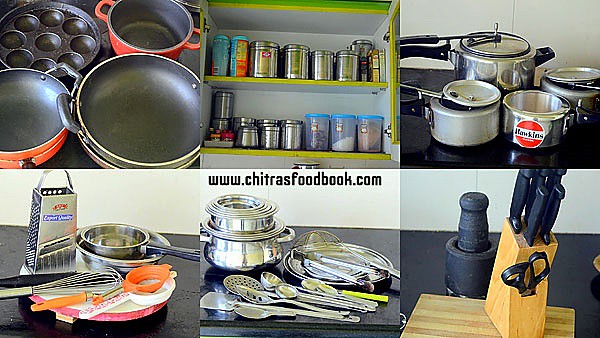
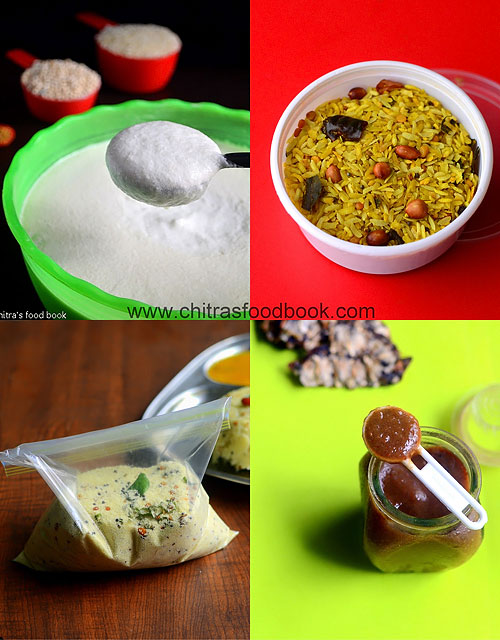
Friends, this post is all about useful cooking tips for Indian working women, beginners in cooking, bachelors, stay at home moms with babies in hand and for house wives who wish to finish the morning chores quickly and easily without any tension .These pre-preparation ideas would help you feel relaxed and manage to do quick and easy cooking during the busy, hectic weekdays. Recent days I have been getting mails to share some simple lunch menu ideas for busy weekdays by spending less time in kitchen. Very soon I will start a lunch menu series suggesting some easy and healthy Indian lunch recipes for daily cooking. Before that, I wanted to make a post about useful cooking tips & pre preparations to make the job easier. As I have worked for an year after marriage, I have seen & heard from my colleagues about the difficulties in managing home and career.Time management plays a major role here. For me, there was no problem at all as I was in a joint family. My in-laws did all the household chores and supported us very well.In this present day nuclear family setup, many people does not get the luxury of moral & physical support of elders to share cooking and other household responsibilities. So it would be really tiresome and stressful if we don’t plan things ahead. I hope these simple, handy tips and tricks would  be helpful to make the kitchen chores easier and stress freeHappy. Don’t worry, these pre-preparations won’t eat your weekend’s relaxing hours. You may need to spend just 2-3 hours to finish all these works or you can get the help of your servant maid to finish this job quickly. This will save lot of time during busy weekdays. Before going to this post, I must thank my friend Shalini for helping me to frame these points as she is regularly following these things.Love you lots dear Love Struck. She also shared some pictures from her kitchen. I have made them as a collage and given below. Friends, I hope this post would be useful to plan & manage things easier. Working women and bachelors, please share your valuable tips you follow in your daily cooking in the comments section. It would be of great help for the people who read this post. Thanks in advanceHappy. Ok, now lets see some smart cooking tips and secrets to be a super wife and momWinking.This post is with more & more of stories and essays. Please bear with meTongue.

DISCLAIMER : All the points I have shared below is based on the ideas I got from my working friends. I have also gone through some websites and magazines for more tips. Please modify or skip the suggestions as per your wish & need. You need to have a refrigerator, pressure cooker and some good air tight containers to make & store the dishes.
Cooking tips for working women Indian

SOME USEFUL GADGETS

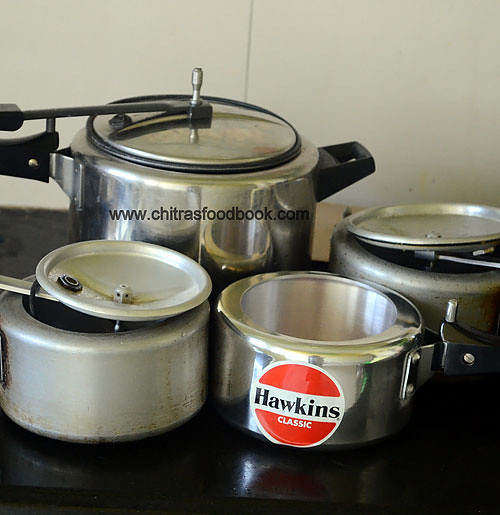
According to me a 2 burner gas stove, 3 small pressure cookers, few ladles, mixing bowl and a mixer grinder is enough to cook even for 10 people. Pressure cooker is my biggest strength. It helps to cook any food quickly and easily. I have shared the pictures of  my cookers above for your reference.I use 3 Hawkins small sized pressure cookers ( 1.5 liters and 2 liters) and one 5 liter cooker. I use 2 of them for lunch preparation and 1 for cooking breakfast. I use the big sized cooker only for my guest. I will share how I use these cookers for quick cooking in my upcoming lunch menu series.
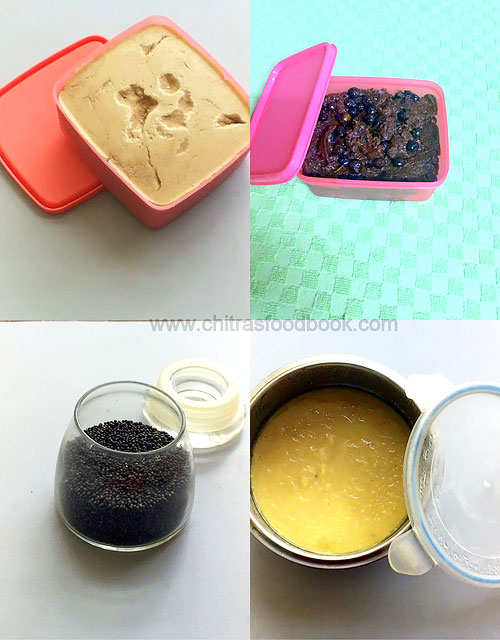
Cooking tips for working women - Indian
Pic courtesy – My friend Shalini
PLAN AHEAD

Make a weekly timetable for the menu according to your family's preferences. Keep a list of all the dishes you want to cook in the following week and write down all the required ingredients so that you can purchase all the groceries and vegetables as per the list.If you don’t like to spend time in grocery shopping, go for a monthly purchase. Refer my “Monthly Grocery list” post for the idea. You can buy vegetables once in 10 days and store them in refrigerator.  I follow this every month to save my time spent in shopping.

GRIND THE BATTER

This point is especially for people who rely on Idli dosa recipes. Grind Idli dosa batter, Appam batter, Adai batter during weekend and store it for a week. You can even make millet idli, dosa batter and store it for one day. Idli, dosa batter is a real savior in Indian cooking. You can make idli, dosa, uthappam, Paniyaram for breakfast and dinner as well. Similarly you can also grind and keep batter for dosa varieties like Set dosa, sponge dosa, poha dosa etc. It will help you for sure. My friend Shalini's maid helps her to grind varieties of idli and dosa batters during every Sunday for the whole week's use. Even though I am a house wife, I too grind all the batters during weekends and use it mainly for the week's breakfast because I don't want to hit my head thinking about breakfast recipes during busy morning hours. Generally I make Instant dosa varieties, Instant idli varieties like oats idli, rava idli, upma recipes like wheat rava upma, vegetable rava kichdi, millet recipes, Ragi roti, Phulka or stuffed paratha varieties for my dinner. I try to avoid consuming rice at night.
Check out my Idli varieties post for varieties of idli,dosa batter. Check out my easy dosa batter recipe too ! For other options, you can make instant dosa varieties, upma varieties for breakfast or dinner.

MAKE ROTI DOUGH

Make roti dough well in advance and refrigerate it. The kneaded dough will remain fresh for at least 2-3 days. You can make use of this dough for making roti , poori and stuffed paratha. Remember to store in an air tight box. Take only the required quantity of dough from the box and immediately refrigerate the leftover dough.  But try to use it within 3 days.

PREPARE THE SIDE DISHES

When we have idli, dosa batter in our hand, we start to hit our head for making side dishes. That’s quite natural. So prepare some side dishes like tomato thokku without onion, tomato thokku with onion, onion tomato chutney, garlic chutney, Raw onion chutney, Idli Podi/Gun powder, green chutney without coconut based on your preference and store in an air tight box. It will stay good for a week. You can use these chutneys as side dish for idli, dosa, appam and roti or use it as sandwich spread too. I usually make onion tomato chutney and stock it for my daughter’s breakfast and lunch box. For roti, you can prepare side dishes like capsicum-tomato curry, tomato thokku, pickles and even jam for your kids.  You can even cook Dal for making dal tadka or dal curry and refrigerate for 3 days. If you love to have pasta, you can make white sauce & pasta sauce ahead and store them.

Check out my 50 chutney recipes for more ideas.

For quick lunch, you can prepare and store Pulikachal paste/Puliyogare paste, Lemon rice paste, coriander thokku, thogayal varieties, Vathakuzhambu paste and podi/powder varieties like Dal powder/Paruppu podi, Dhania/coriander seeds powder, Angaya podi, Sundakkai podi, Poondu podi/Garlic powder, coconut podi etc.

Kuzhambu varieties like vatha kuzhambu, poondu kuzhambu, milagu kuzhambu, kara kuzhambu, tomato gravy, brinjal gravy stays good for even 2 -3 days with or without refrigeration. So you can make them once or twice in a week apart from sambar and rasam.
Check out my 30+ kuzhambu varieties post to get the links for the above recipes.

READYMADE BREAKFAST MIX

Roast rava and keep in bulk. It will help you to make upma quickly. You can also make Rava/sooji upma mix, Poha mix, pongal mix, rice upma mix in advance and store in the freezer. It helps you to make your breakfast or dinner quickly and easily. Always keep a packet of bread in stock for making quick sandwich or toast.

CHOP THE VEGETABLES AND FREEZE

Vegetables like carrot, beans, peas, cauliflower, sweet corn, cluster beans, spinach, broad beans can be diced or chopped & frozen for a week.If you want to use the vegetable for the next day morning, you can simply refrigerate the chopped veggies. Do not freeze them. Usually I keep frozen peas and frozen corn always in stock. Grate 2 coconuts and store 3/4th of the quantity in a zip lock cover.Deep freeze it. Store the remaining coconut in refrigerator. Just thaw it for few minutes before use or use warm water to grind the coconut. Take the required quantity of coconut, refrigerate it and keep the remaining in freezer immediately. De-stem coriander, curry leaves and mint leaves and store in an air tight box. Mostly I use palak leaves during weekdays as it is easy for cleaning, chopping and cooking. During weekends, I buy other greens/Keerai varieties, clean them and store in a ziplock cover.Do not chop onions and store. It attracts more bacteria when its cut.
Apart from chopping veggies, you can make some lemon juice and store in a glass bottle, peel garlic cloves, Peel &finely chop ginger, peel small onions and keep them ready for usage. But remember to store the chopped vegetables in a clean zip lock cover and refrigerate.

COOK PUREES, PASTE & LENTILS – Cook toor dal or moong dal in large quantity and store in a box for 2-3 days use. You can use them and make sambar instantly. Soak beans like rajma,dried peas and chana for 8 hours and refrigerate them for later use. You can easily cook a quick meal like pulao,  biryani or gravies & even make a healthy salad with it. Sprout green gram and other legumes based on your liking and keep them in the freezer. So whenever you want to have some salad, you can semi cook and have them ready.
Grind and keep tomato puree, homemade tamarind paste, ginger-garlic paste, onion paste, sauce varieties ready in hand. You can also keep some readymade seasoning, green chilli paste.Some people keep some sauteed, browned onions too. I have seen some of my friends making onion-tomato puree adding masala powders and keep the base ready for making North Indian gravies. If you have enough time in hand, you can even make two to three varieties of curries and refrigerate them.
Vegetables like potato, cauliflower, sweet corn and peas can be boiled in advance and refrigerated for later use. You can even cook pasta and store them in the fridge.
Keep curd, buttermilk, paneer, cheese and other essential milk products ready in hand so that you can use it for raita, buttermilk/ Chaas, lassi, gravies and sandwich.

TO DO LIST
I have summarized the above points and shared a TO-DO list for weekend. Do this according to your preference and time in hand.
  1. Grind idli, dosa batter and other batters if grinding.
  2. Make chapathi/ roti dough.
  3. Soak pulses & lentils like rajma, chana/ kabuli, peas.
  4. Chop all the required vegetables. Make frozen peas and sweet corn.
  5. De stem green leaves/Spinach, coriander leaves, mint leaves and curry leaves.
  6. Cook toor dal and moong dal in large quantity for making sambar & dal for roti.
  7. Make Tamarind paste, Tomato puree, Puliyogare paste, Tomato thokku, homemade powders like dal powder, curry leaves powder, coriander leaves thokku, thogayal varieties, Lemon rice mix, Chutney varieties according to your choice. ( I have shared the links in the above sections. please check it)
  8. Make white sauce and pasta sauce for cooking pasta recipes.
  9. Prepare rava/sooji upma mix, poha mix, dosa mix, pongal mix.
  10. Make onion tomato base for North Indian gravies.
  11. Purchase week’s grocery and vegetables.
  12. House cleaning if needed Happy.
Friends,I  hope this post will be helpful to you. Thanks for visiting this page !!

السبت، 9 يوليو 2016

How To Make Tamarind Paste – Tamarind Pulp / Puli Paste Recipe

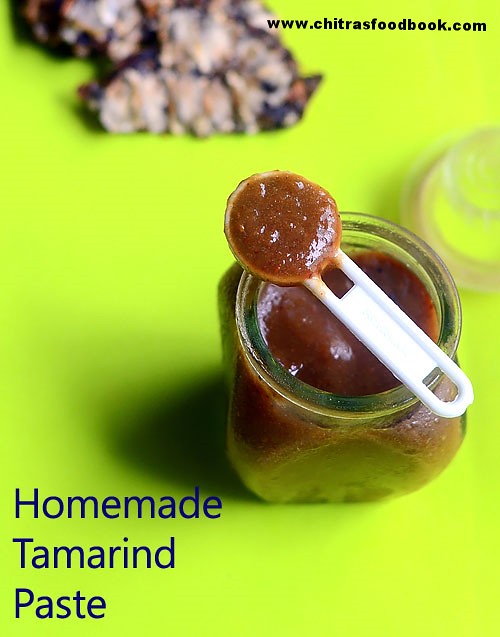
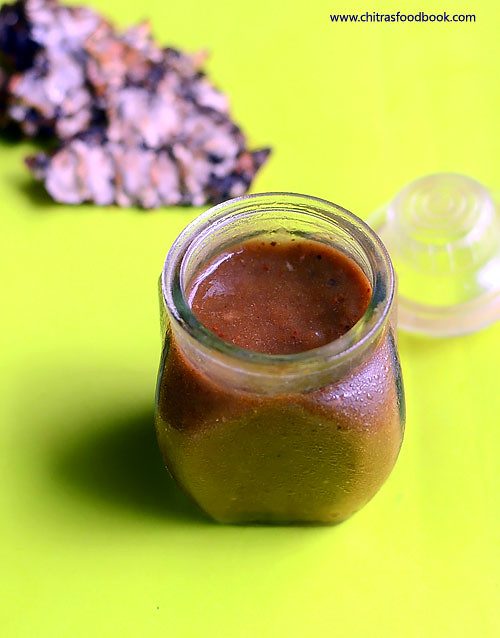
Tamarind paste/Tamarind pulp  ( Puli Paste) is one of the most important ingredients for making sambar, rasam, vathakuzhambu in South Indian cooking. I have seen my friends buying tamarind paste from stores every month in their grocery purchase. But I don’t have the habit of using store bought tamarind paste as I am concerned about the use of preservatives. So I soak tamarind everyday before I start cooking and take tamarind pulp freshly. But most of the time I forget to soak and do it in last minute by heating the tamarind in water for quick soakingBatting Eyelashes. Recently when I was talking with my friend Shalini, she told about her homemade tamarind paste. She said its handy for quick cooking and the wastage of tamarind would be very much reduced. She told me to try it once to believeTongue.Last week I made tamarind paste just for 1 week usage and stored in refrigerator.As she told, its really useful and I am impressed with this. It saves more time especially while cooking during busy morning hours. I am sure it would be a big help for working women. You can make it in bulk quantity and preserve for months by keeping in refrigerator. It would be much better than store bought tamarind pulp. Lets see how to make tamarind paste at home and store it.

Homemade Tamarind Paste


Homemade Tamarind Paste How to make tamarind paste at home
Cuisine: Indian
Category: Coking basics
Serves: -
Prep time: 30 Minutes
Cook time: 20 Minutes
Total time: 50 Minutes


INGREDIENTS
1 cup - 250ml
  • Tamarind - 200gms
  • Water - 1 cup
  • Salt - as needed
METHOD

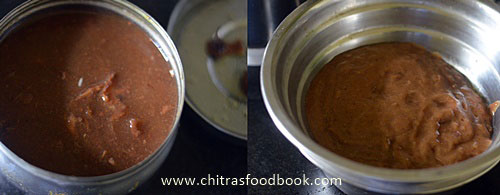
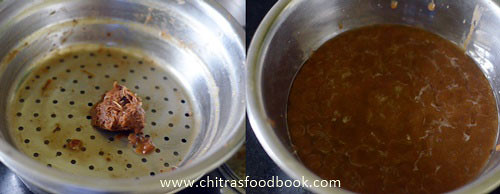
  • Soak tamarind in 1 cup of  hot water for 30 minutes to 1 hour. Tamarind will become soft and well soaked.Squeeze the tamarind and remove seeds, grits if any. ( If you feel, there are more hard shells/ grits, add 1/2 cup more water while soaking so that all the grits will settle down, remove the thick tamarind OR squeeze the tamarind hard so that the grits will settle in your hand)  Grind the soaked tamarind adding little water. Grind to a thick paste. Mix with the soaked water and transfer the paste through a colander and squeeze the paste well. Discard the waste if any.
How to make tamarind paste
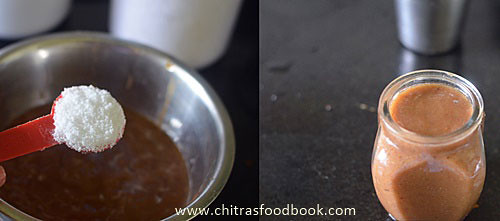
  • Add the required salt and store in an air tight glass bottle ( preferably) and refrigerate it. You can follow this method if using the paste for one week to 10 days. If you want to preserve the paste for more than a week, proceed to the next step.
Homemade tamarind paste
  • In a wide bowl, take the tamarind pulp and boil for 5 minutes in medium flame.  It may splash everywhere. So keep it closed and stir it once or twice in the middle carefully. Switch off the flame. Mix well and let the paste cool completely. Tamarind paste resemble like a cream.
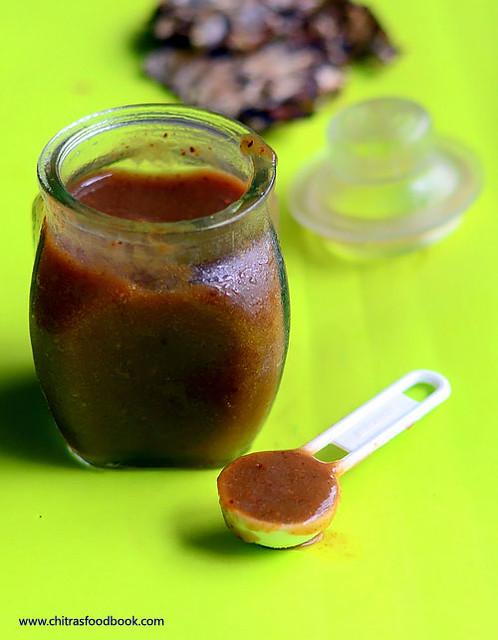
  • After the paste is cooled down completely, store in an air tight glass jar and preserve it for months. You can also keep it in a porcelain jar( Peengaan jaadi).
  • Add 1.5 tbsp of this paste for sambar, 2-3 tbsp for vathakuzhambu and 1 tbsp for rasam based on the number of serving.

Note
  • You can preserve this tamarind paste for months only if its cooked.
  • If the pulp is raw, you can store it only for a week or max 10 days. 
  • You can add 1 tbsp of cooking oil to the paste while it boils which acts as a preservative. But I used only salt.

Make your own homemade tamarind paste and use it for your quick cooking !
Homemade tamarind paste

الأربعاء، 9 مارس 2016

Kitchen Utensils & Tools List For Home With PDF

Kitchen utensils list

In my previous post, I have shared the list of essential kitchen appliances needed for a home. In this post, you can find the list of Kitchen utensils required for setting up a new Indian kitchen.In this post, I have discussed the uses of utensils & kitchen tools and shared the list of all possible kitchen utensils & tools. I have segmented them under different categories namely Cookware, Storages,Serve ware, Bakeware and tools. But I have not recommended any brands. As I promised in my previous post, I have also shared a PDF of Kitchen appliances & utensils list.Please click on the link and download it, Its free. Do the changes as per your need. All the utensils I have given here are not purchased in one day. You don’t need everything at the beginning of cooking too. It could be accumulated in months, years based on your requirement & usage. I referred this & this post for making the list. I hope this list would help beginners to arrange their new kitchen. Wishing you all the very best. Happy cooking !!
Click HERE to view & download the PDF.
I have given affiliate links for all the utensils from Amazon with links and pictures.
Here is my routine dialogue : Friends, take this list as a guidance and buy the utensils which is of use to you. Even I don’t have many of the tools & utensils listed hereWinking. Its just the collection of all possible kitchen utensils & tools.If you feel anything important is missed here, please share it in comments section. I will update it. Thanks for visiting this page.Leave your feedback about this list. It would make me even more happy.Happy

Click HERE to view & download the PDF.
Click HERE to view Kitchen appliances list with brand recommendations.


USES OF UTENSILS
  • A kadai/Skillet is used for stir frying, sauting, cooking and boiling. You can use stainless steel or Non-stick or ceramic kadai. But an iron kadai is recommended for deep frying. So better buy a small sized or medium sized iron kadai too.Also try to buy the ones with sturdy handles and a transparent lid.
  • Tadka pan/ Mini kadai is used for seasoning Indian dishes.
  • Stock Pots, Saucepans and Stainless steel cooking pots can be used for boiling gravies, soups,stews,Cooking vegetables and greens. It would be better if its with transparent lid.
  • Thick bottomed milk pan  or Milk cooker – I prefer stainless steel ones.
  • Pressure cooker – For cooking rice,steaming vegetables. To me its the heart of utensils. I can cook any number of dishes if I have two cookers in handHappy
  • Stackable stainless steel cooking pots in various sizes – Its mainly used for serving gravies,chutney & curries.
  • Cassorle/ Hot pack – To keep roti, idli, rice & gravies warm for hours.
  • Idli pot & Dosa pan for making idli & dosa
  • Appam pan/Paniyaram pan/ uthappam pan – For making appam, Paniyaram, Utappam
  • Glass bowls – If you have microwave, you can use it for reheating and cooking.
  • Big Stainless steel bowls or plastic bowls for making chapathi/bread dough, for rinsing vegetables.
  • Plates – For serving & covering the food
  • Ladles & spoon – For cooking & serving gravies,curries etc
  • Cups/Coffee cups/Water glass/Tumblers – For serving liquids
  • Tea pot / Flask – To keep coffee or tea
  • Measurement cups & spoons – Mainly needed for baking & sweets making.
  • Rice server and idli scooper – To serve rice & to remove idli.
  • Rolling pin & board - For making roti,Poori etc
  • Knives & scissors – To chop & cut ( Invest in good quality ones)
  • Peeler & grater – To peel the skin of vegetables , grater for grating cheese,vegetables
  • Scrapper – mainly used for coconut scrapping
  • Perforated frying spoon/skimmer/strainer for deep frying  [Hindi: jhaara/zara]
  • Tongs/Idukki in Tamil – Its mainly used for removing roti & papad from hot oil.
  • Locking tongs – For holding hot vessels
  • Whisk & churner – For mixing batter without lumps, whip curd and for mixing cake batter.
  • Big sized Storage containers for storing groceries & Dosa batter
  • Medium & Small sized containers for storing pickles, spice powders etc
  • Spice box/Anjarai petti – For storing whole spices
  • Masher – For mashing boiled potato, kichadi and other dishes.
  • Wire mesh – It is used to puff up roti, roast papad, brinjals etc


Click HERE to view Kitchen appliances list with brand recommendations.

COOKWARE


SERVEWARE
 
STORAGES


BAKEWARE
 
KITCHEN TOOLS
 
MISCELLANEOUS
FLOOR CARE & CLEANING ITEMS


Click HERE to view & download the PDF.
Click HERE to view Kitchen appliances list with brand recommendations.


الأحد، 3 يناير 2016

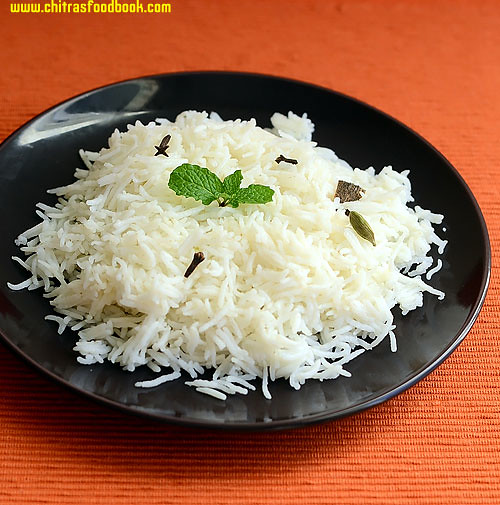
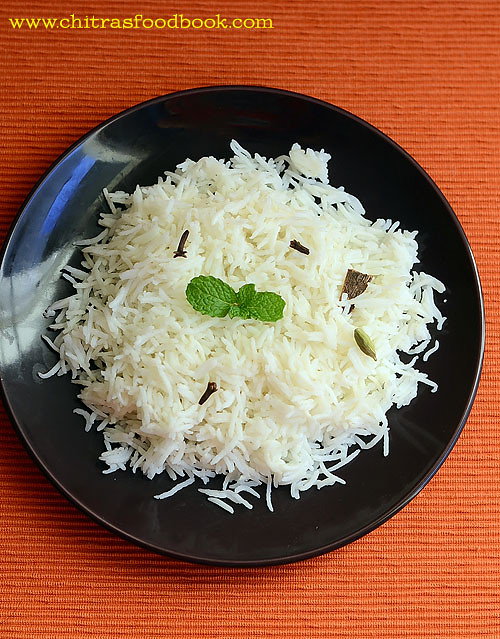
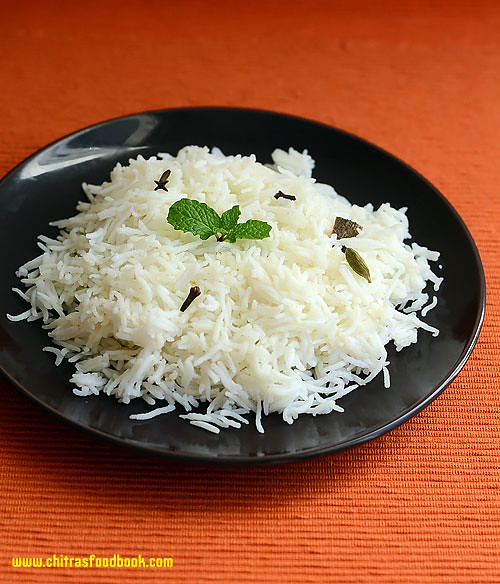
How To Cook Basmati Rice For Biryani,Pulao

How to cook basmati rice for biryani
In this post, I have shared how to cook basmati rice in a pressure cooker, open pot, rice cooker and Microwave oven.
Basmati rice & Seeraga Samba Rice/Samba rice is one of the most important ingredient for making biryani and pulao recipes.This fragrant rice gives a nice flavor,aroma to the dish and makes it more special.Perfect cooking of basmati rice yields a fluffy,slender,long grain look that makes the dish more appealing to our eyes.So most of us always look for basmati rice cooking tips,correct water ratio,soaking time & proportions to cook it perfectly.Having tried more than 30+ Veg biryani recipes using basmati rice,I thought of sharing my observations and tips to cook a perfect basmati rice in various ways in this post.Cooking jeera rice/Seeraga samba rice is very simple.I have shared the details below.Basmati rice can be cooked in a pressure cooker,rice cooker or in a pot(Open or closed).Its cooking method completely depends on the dish we make.For making one pot biryani or pulao recipes,pressure cooker method or closed pot method is the best whereas for Dum biryani,open pot cooking is preferrable.I personally like to cook basmati rice using open pot method as we can have control over the cooking of rice and remove them without breaking.So in this post,i have shared how to cook basmati rice using pressure cooker,rice cooker,microwave and open pot method.There are many brands of Basmati rice available in the market.But i prefer & buy Kohinoor & India Gate basmati rice.Ok,enough of stories,lets see how to cook basmati rice perfectly with stepwise pictures and its health benefits at the end of this post.
Points to note
  • You can use any brand of basmati rice but please read the back of packet for the instructions of cooking and water quantity to get a rough idea.This is the first thing you should do to cook a perfect rice.In this post,i have mentioned the water quantity for India Gate Dubar- Green color packet.
  • Basmati rice needs a minimum soaking time for 30 minutes to elongate while cooking.As a first step, try to soak the rice before you start making pulao/biryani.It is enough to soak it for a while you chop the veggies and do the grinding jobs if any.
  • You can whole garam masala like 1 cinnamom,2 cloves,1 cardamom,1 bayleaf,1 star anise & 1 black stone flower in the water while cooking. 
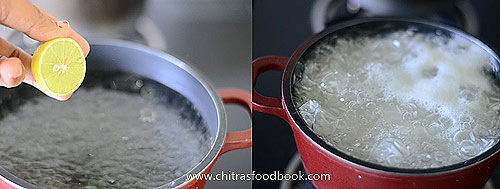
  • Addition of lemon juice gives you the rice white in color.So wash the rice twice and add lemon juice while cooking to get the nice color.
  • If the recipe calls for more tomatoes or tomato puree,adjust the quantity of water accordingly.
  • In my observation,For 1 cup of basmati rice rice i.e.200ml
Soaking time Water quantity
No soaking 2 cups
Less than 30 minutes  1.75 cups
1 to 4 hours 1.5 cups
More than 6 hours or overnight 1.25-1.5 cups

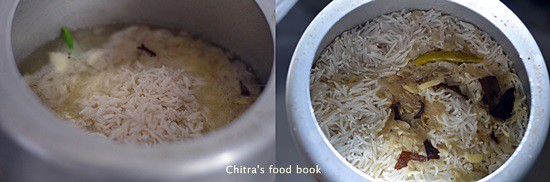
How to cook basmati rice in cooker

How to cook basmati rice


How to cook basmati rice How to cook basmati rice for making biryani & Pulao
Cuisine: Indian
Category: Cooking basics
Serves: -
Prep time: 10 Minutes
Cook time: 15 Minutes
Total time: 25 Minutes
INGREDIENTS
1 cup = 200ml

  • Basmati rice - 1 cup ( India Gate Dubar-Green color packet)
  • Water -1.5 to 2 cups depending on soaking time
  • Salt - as needed
  • Whole garam masala( 1 cinnamon,2 cloves,1 cardamom,1 bayleaf,1 black stone flower) – optional
  • Lemon juice – 1/2 of small lemon
FOR SAMBA RICE
  • Seeraga Samba Rice –1  cup
  • Water – 1.75 cups
  • Cooking oil – 1 tsp
METHOD

HOW TO COOK SEERAGA SAMBA RICE/SAMBA RICE
Wash and add the rice to the cooker along with sauteed spices.No need to soak the rice.Add 1.75 cups of water for 1 cup of water.Pressure cook the rice in low flame for one whistle.Remove the rice after steam is released.Fluff it with a fork.Please check my Ambur biryani recipe & Donne biryani recipe, Kovai Angannan biryani using samba rice.

HOW TO COOK BASMATI RICE IN DIFFERENT WAYS
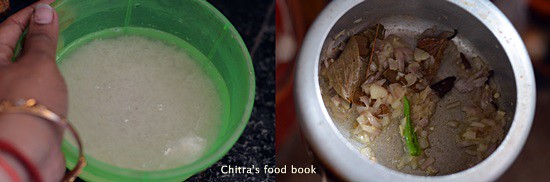
  • Pressure cooker method: Wash the basmati rice twice and soak it for minimum 30 minutes to maximum overnight. Soking helps the rice to elongate while cooking.So soaking atleast 30 minutes in necessary.Drain the soaked water(carbs would be removed) and put the rice inside the cooker.If you wish,roast the rice for 2-3 minutes in a kadai without breaking the rice.Take a pressure cooker and add 1.75 cups of water if you have soaked for 30 minutes to 1 hour.The quantity of water may differ based on the rice brands & soaking time.Check out the table above.Add a tsp of oil/ghee and squeeze the lemon juice in water.Put the weight valve when the steam is fully up.Lower the flame completely and cook the rice for one whistle.Remove the rice after the steam is released completely.Transfer it to wide plate.Drizzle a tsp of oil and let the rice cool down.Cover it with a lid to prevent drying.
How to cook basmati rice
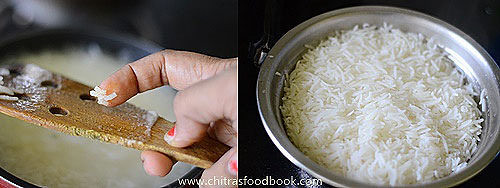
  • Open Pot method: Take the rice and wash it twice.Boil 5 cups of water for 1 cup of rice.When the water comes to a roll boil,add the whole garam masala,few drops of  lemon jucie, washed & drained rice.No need to close the bowl.Let the rice cook in open pot in medium high flame for 4-5 minutes.Stir it once or twice in between.When the rice is cooked to 90%( You should be able to break the rice),remove it and drain the excess water in a colander.Collect the hot water in a bowl.You can keep this bowl of water over the lid when you put the rice in dum.Spread the drained rice in a plate and add 2 tsp of oil.Cover it with a lid to avoid drying.
How to cook basmati rice
  • Microwave method: Wash and soak the rice for minimum 30 minutes.Keep it in a microwave safe bowl double the size of water quantity ( to avoid water spilling)and add 2 cups of water,a tsp of oil and few drops of lemon juice.Cover the bowl with a microwave safe lid. Cook in high power(800w) for 2-3 minutes.Take the bowl and stir the rice once.Again keep in high power for 2 minutes.Check whether the rice is done.Transfer the rice to a plate and cover it with a lid to prevent drying.
  • Rice Cooker Method:Wash and soak the rice for 30 minutes.Saute the spices as per the recipe and pour 2.5 cups of water for 1 cup of rice.After the water starts to roll boil , add the rice.Check for salt and cover cook for sometime.Cooker will automatically switch to “Keep warm” mode.Open the lid and check whether rice is cooked well.If not add 1/2 cup of water, mix well and again switch it to “cooking” mode.Please check my tomato rice recipe using rice cooker recipe for more details.


Health Benefits of basmati rice
Basmati is considered to be a Healthy”super grain”.It is gluten-free and low in fat. It contains all eight essential amino acids, folic acid, and is very low in sodium and has no cholesterol.Basmati has a low to medium glycaemic index, meaning that energy is released at a slower, steadier rate leading to a more balanced level of energy.Basmati rice builds body tissue and is very rich in prana or vital bio-energy.Basmati rice can be beneficial to certain groups of people. Those on low-calorie diets can benefit from incorporating this grain into their diets since it is so low in fat. However, at slightly over 200 calories per cup, the calories can pile up if not eaten in moderation.

How to cook basmati rice for biryani

الاثنين، 28 ديسمبر 2015

Biryani Spices List, Names, Pictures, Health Benefits

Biryani spices
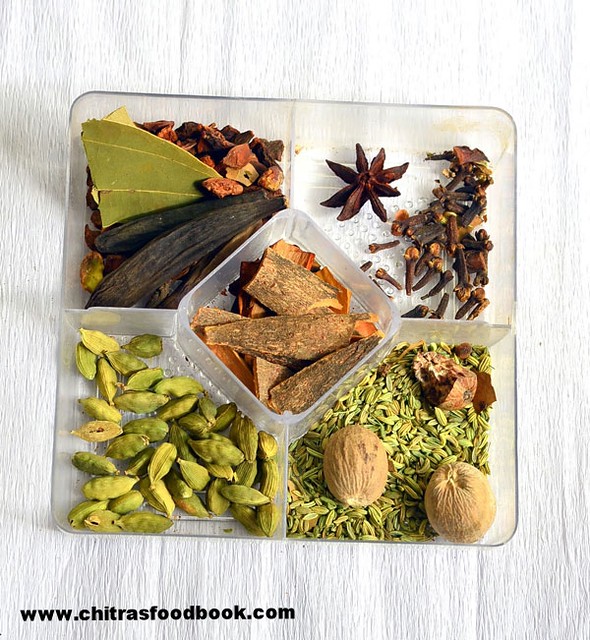
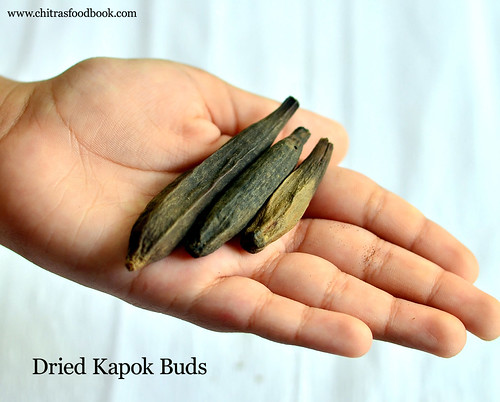
For the past few months,i have been sharing varieties of (Vegetarian)Veg biryani recipes in my blog under “Sunday Lunch Recipes”.I hope many of you had found it useful and tried them too.I am planning to compile all the biryani recipes under one page for easy and quick reference.But before that,i want to make a post on list of spices used in most of the biryani along with pictures and names in different languages like English, Hindi,Telugu,Malayalam,Kannada & Tamil for people to identify & buy them easily in your place.I have also shared their health benefits so that you can enjoy your biryani without any guilt .You can find about cinnamon,cloves,cardamom,bayleaf,black stone flower,mace,nutmeg,kapok buds and fennel seeds.Nowadays in most of the places,all these ingredients are together sold in small packets as “Biryani masala”.You can use these spices to make Biryani masala powder at home.Ok,lets see the biryani spices list with its names & pictures.

**All these informations are collected from Internet,Please leave your feedback in comments if you feel anything important is missed or mispelt.I will add them.Thanks !


English Tamil Hindi Telugu Malayalam Kannada
Cinnamon Pattai Dalchini Dhalchinachekka / Patta / Karugapatta Chakke
Cloves Krambu / Lavangam Laung Lavangam Grambu Lavang
Cardamom Yelakkai Elachi Elakayi Elaka Elakkaya / Elakka
Mace Jathipathri / Jathikai thol Jaipatri / Javintri Japathri, Jajikaya Pathri JathiPoo Japatri / Jayithree
Black stone flower Kalpasi Phathar ke phool, Dagad Phool Kallupachi, Rathipachi Celeyam, kalppuvu Kallu huva
Fennel seeds/Aniseed Soambu / Perunjeeragam Valaiti Saunf / Aawonf Kuppi Soptu/Sompu Shombu Sompu
Star anise Annasi poo Anasphal / Badayan / Chakri Phool Anaspuvu Takkolam Anasi hoova / Pineapple Moggu
Bayleaf Brinji ilai Tej Patta  Masala Aku / Biryani Aaku Karuva Ela Biryani Ele / Paththa
Nutmeg Jathikai Jaiphal Jajikaya Jathikka Jayikai
Dried Kapok buds Marathi mokku Shalmali, Semul, Kachra, Kabra, Karer,  Kariyal Marathi Mogga
Tella Buruga, Enugadanta, Mumudatu
Appakuttaka, Parappoola, Parapanni Marathi Moggu or Ilavu or Puulaa, Mullilavu


HEALTH BENEFITS
Fennel seeds

Fennel seed

  • Fennel symbolizes longevity, courage, and strength. In addition to its use as medicinal values, fennel has many health benefiting nutrients, essential compounds, anti-oxidants, dietary fiber, minerals, and vitamins.
  • It offers protection from cancers, infection, aging and degenerative neurological diseases..
  • Furthermore, fennel seeds indeed are the storehouse for many vital vitamins. Vitamin A, vitamin E, vitamin C as well as many B-complex vitamins like thiamin, pyridoxine, riboflavin and niacin particularly are concentrated in these seeds.
Source : http://www.nutrition-and-you.com/fennel-seed.html
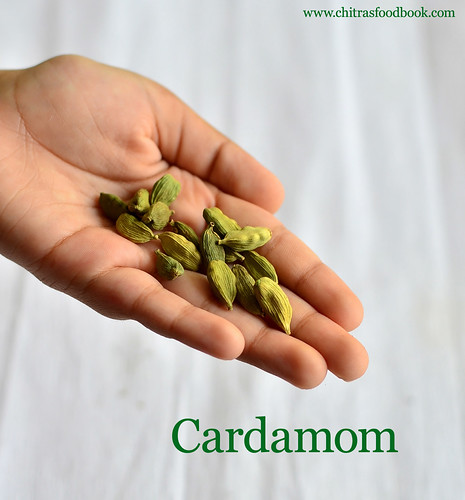
Cardamom

Cardamom

  • Cardamom is one of the most effective remedies against halitosis. Simply chewing on the seeds eliminates bad odors. Cardamom is even used in some chewing gums because of its effectiveness, billed as a surefire cure to the most offensive breath.It can also be used to help soothe a sore throat and relieve hoarseness of voice.
  • The volatile oil in cardamom has been proven to soothe the stomach and intestines, making cardamom an ideal solution for a host of digestive problems, such as constipation, dysentery, and indigestion. 
  • Cardamom can be used aromatically to increase or encourage appetite, and also assists in soothing gas and heartburn. Generally, cardamom relieves most upset stomachs. To use Cardamom for digestive problems, consume seeds alone, serve ground seed with food, or serve as a tea.
  • South Asians use cardamom’s relieving properties to help with the discomfort of passing gall and kidney stones. Cardamom, combined with banana leaf and alma juice, can act as a diuretic, soothing a variety of kidney, bladder, and urinary problems like nephritis, burning or painful urination, and frequent urges to urinate. The relief from uncomfortable symptoms provided through cardamom should not be considered a cure to underlying diseases and disorders.
  • Cardamom oils can be added to baths as a form of aromatherapy that fights depression and reduces stress. Ground Cardamom seeds can be made into a tea for similar benefits.
  • Cardamom helps to fight cancers like breast cancer, ovarian cancer and prostate cancer. Early research suggests that consuming cardamom regularly may help with preventing these forms of cancer.
In addition to these specific medicinal uses, cardamom contains an abundance of antioxidants, which protect the body against aging and stress and fight common sicknesses.
Source : http://www.herbwisdom.com/herb-cardamom.html
star anise

Star Anise

  • Medicinal Value :Star Anise fruit is anti-bacterial, anti-spasmodic and a diurectic. Hence widely used in flatulence or gas like conditions.
  • Culinery and Other Values:Star Anise is a major ingredient in Chinese Dishes for flavoring meat, veggies, curries, confectionaries and for pickling purposes. The oil of Star Anise is used to flavor bakery products, soft drinks and liquors. Also used in perfumery.
Mace
Mace
  • Good source of minerals like copper, calcium, potassium, manganese, iron, zinc etc. also rich in vitamin C, A, riboflavin, folic acid etc.
  • Used as drug in Eastern countries due to its stimulant, carminative, astringent and aphrodisiac properties.
  • Mace is used in savoury dishes.
Source:http://pachakam.com/GlossaryDetail/Mace=180
Cinnamon

Cinnamon

  • Cinnamon is loaded with powerful antioxidants, such as polyphenols (3, 4, 5).
  • cinnamon can be used as a natural food preservative
  • Cinnamon Has Anti-Inflammatory Properties.It helps the body fight infections and repair tissue damage.
  • Cinnamon May Cut the Risk of Heart Disease.In people with type 2 diabetes, 1 gram of cinnamon per day has beneficial effects on blood markers.It reduces levels of total cholesterol, LDL cholesterol and triglycerides, while HDL cholesterol remains stable.
  • Cinnamon May Be Protective Against Cancer.Cinnamon Helps Fight Bacterial and Fungal Infections.
Cloves

Cloves

  • Temporarily treat a toothache.
  • Relieve upper respiratory infections.
  • Treat scrapes and bruises.
  • Improve digestion
  • Enhance sexual health.
  • Reduce inflammation.
Source :http://www.mindbodygreen.com/0-9991/6-health-benefits-of-cloves.html
Black stone flower

Kalpasi

Black stone flower

Dagad phool/black stone flower are commonly found in any markets or with spice smiths and it has uses in many dishes in hyderabadi.Similar to those of sweet pepper, it has quite mild aromatic flavor. It is not only used for aromas in soup preparations but also used as soup thickeners.
Stone flowers have medical properties to cure HIV virus. Stone flowers are the biological indicators of air pollution.
It is a good pain reliever and also promotes early healing of wounds due to its bitter taste.
It helps treating the skin related problem due to its cold potency. It helps in reducing any kind of inflammation in body.
Source : http://www.etradeasia.com/
Nutmeg

Nutmeg

  • Provides relief from insomnia
  • Helps to lower blood pressure
  • Helps to eliminate bad breath
  • Helps to dissolve kidney stone
  • Boost health of bones of body
  • Helps in elimination of toxins from body
  • Beneficial in maintaining optimal brain health
  • Helps to reduce inflammation and pain due to wounds,arthritis
  • Induces secretion of gastric & intestinal juices to ease digestion.
When used appropriately, as a spice, the benefits of nutmeg are obvious, but keep the amount under control, and find your thrills somewhere else!

Source : https://www.organicfacts.net/health-benefits/herbs-and-spices/nutmeg.html
Bayleaf

Bayleaf

  • Bay leaves have been found to be effective in treating type 2 diabetes as they cause reduction in blood glucose, cholesterol and triglyceride levels.
  • Bay leaves are good for promoting digestion and can treat digestive disorders such as heartburn and flatulence.
  • The powerful phytonutrients in bay leaf provide protection against cardiovascular diseases such as heart attacks and strokes.
  • Bay leaves are effective in fighting the symptoms of cold, flu and infections.
Source: http://www.stylecraze.com/articles/benefits-of-bay-leaf-for-skin-hair-and-health/
Marathi moggu

Kapok Buds

Kapok Buds or Marathi Moggu, best described as a type of caper, are the dried buds of the Kapok tree or the Silk Cotton tree. It is called moggu in Kannada and mogga in Telugu which literally means a bud. Moggu is a spice used in some of Karnataka's cherished dishes such as Bisi Bele Bath, Saagu, Kannadiga style kootus to name a few. It is not eaten raw but is always roasted and ground with other spices before going into a dish.
Marathi Moggu is a term which is a misnomer, as this spice is native to Karnataka. However that has not come in the way of its adorning several Andhra style dishes as a specialty spice. This spice is widely used in preparing curry powders and also finds a place in Chettinad cuisine.
For making any biryani,all these spices plays a vital role.No worries if you skip one or two from the above list.But spices like cinnamon,cloves,bayleaf,black stone flower and cardamom should be used to get the actual flavor and taste of biryani.You can either add them as whole or powder them and add to biryani.Among these spices,I would say black stone flower is the hero.Adding just one or two flower takes the biryani to next level and gives restaurant flavor.So make sure you buy them and keep in your pantry.But remember,do not add more than one or two else its smell would over power the masala.