‏إظهار الرسائل ذات التسميات POOJA PROCEDURES. إظهار كافة الرسائل

الأحد، 8 يناير 2017

How To Celebrate Thiruvathirai At Home/ Arudhra Darshan


Significance of Arudra darshan
Soure:wiki and google
Thiruvathirai/Arudhra darshan is a popular Hindu festival celebrated in Tamil Nadu and Kerala.
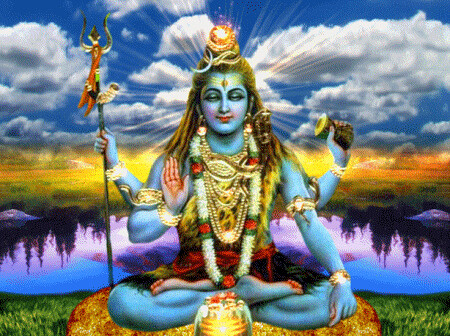
Arudhra Darshan or Arudara Darshan is observed in the Tamil month of Margazhi (December – January) on Thiruvathirai Nakshathram day. In this year 2017, it falls on January 11th,Wednesday ( tomorrow). It is essentially a Shaivite festival and celebrates the cosmic dance of Lord Shiva, which is represented by the Nataraja form. Arudra festival is celebrated with fervor in Lord Shiva temples in Tamil Nadu, Sri Lanka, Singapore, Malaysia, South Africa, Australia and in other parts of the world by Tamil speaking population. In Kerala, this festival is primarily celebrated for women.The most important Arudhra Darisanam festival takes place at the Chidambaram Lord Nataraja Temple in Tamil Nadu. Arudhra signifies the golden red flame and Shiva performs in the form of this red-flamed light.The cosmic dance of Lord Shiva represents five activities – Creation, Protection, Destruction, Embodiment and Release. In essence, it represents the continuous cycle of creation and destruction.Arudra Darshan celebrates this ecstatic dance of Lord Shiva.
It takes place on the full moon night in the month of Margazhi and this is also the longest night in a year. The festival is mainly observed in the Tamil speaking world.As per the Puranaas, on this day Lord Shiva has shown this blissful dance that energizes this world to two of his devotees - Vyagrapadha and Adisesha (on whom Lord Vishnu Reside). Hence this day is celebrated, in appreciation of the cosmic dance of Lord Shiva, by offering Prayers to the Nataraja aspect of the Lord.
Special prayers are held on the day at all Shiva temples. Milk, honey, water, sandal paste and other cooling liquids are offered to Lord Shiva on this day. This is to cool a burning and turbulent Shiva who is performing the Tandava – the cosmic dance of Nataraja.Special abhishekam, rituals and celebrations are held on the night of Thiruvathirai.

Celebration in my house :)

Our Celebration

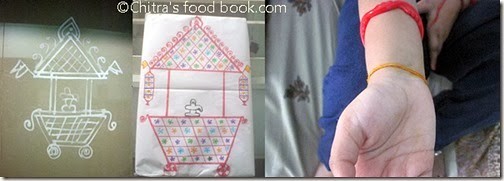
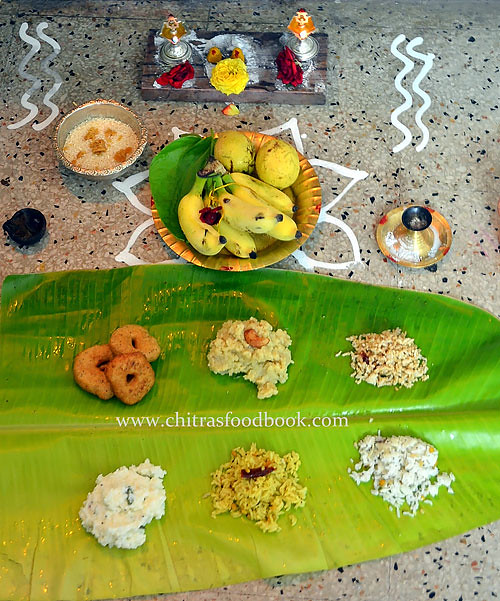
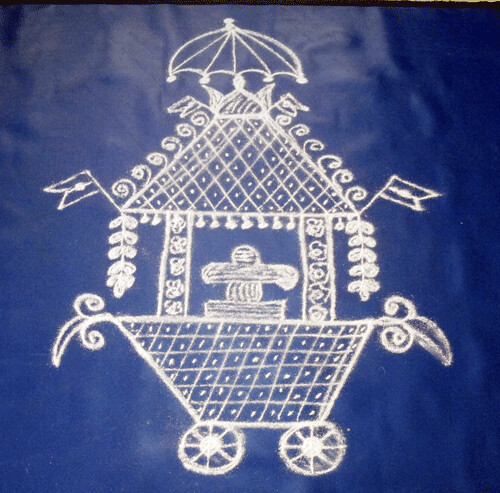
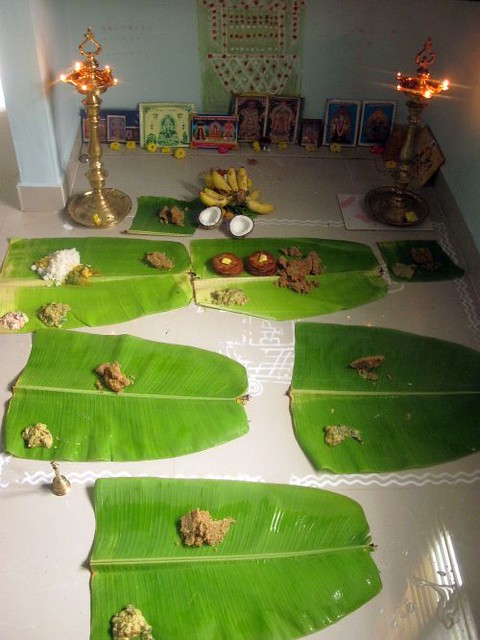
In our house, we celebrate this festival in a grand manner by offering kali, ezhu kai kootu and adai made of rice flour and jaggery to Lord Nataraja. We also draw maakolam all over our house. My MIL draws a procession car(Thaer) with Shiva lingam in the wall of pooja room and consider it as idol.We tie a yellow rope in our hands after pooja. I have shared our pooja procedures in detail . Please check it. You can follow/alter this method based on your tradition.
How to celebrate thiruvathirai
Celebration in my MIL's house :)

How to celebrate thiruvathirai


Ingredients Required

Please CLICK THIS LINK for Thiruvathirai Adai, Kali and kootu recipes.

Thiruvathirai kali recipe with video

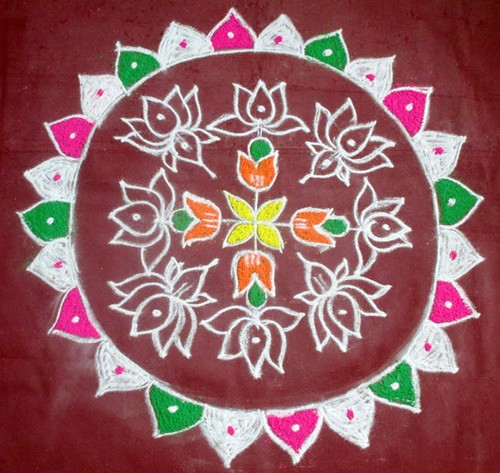
Visit my in-laws blog LEARN KOLAM for Thiruvathirai Kolam
  • Raw rice
  • Moong dal
  • Jaggery
  • Rice flour
  • Cardamom powder
  • Grated coconut
  • Ghee
  • Butter
  • Any 7 vegetables ( Raw banana, sweet potato, yam, pumpkin, broad beans, arbi, field beans, brinjal, chow chow, cluster beans, ladies finger)
  • Green chilli
  • Cumin seeds
  • Coconut oil
  • Tempering ingredients for kootu
For Pooja
  • Coconut
  • Betel leaves and nuts ( 7 each)
  • Fruits ( 7 banana)
  • Banana leaves ( 7 leaves)
  • Turmeric pieces ( 7 nos)
  • Yellow rope ( to tie around wrist or neck)
  • Lamp, wick
  • Incense stick, camphor
Thiruvathirai celebration

Pre Preparatory activities
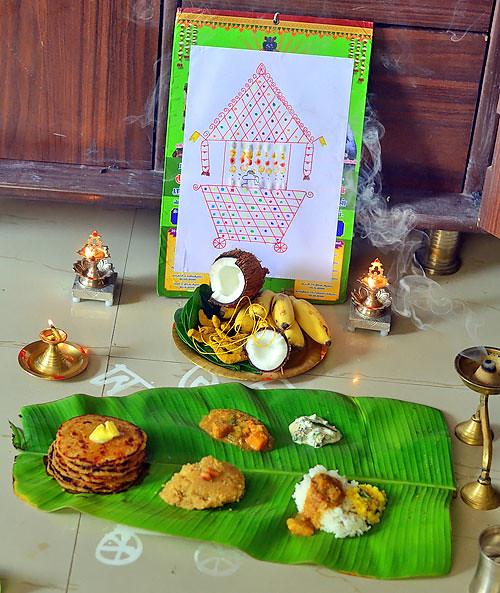
The previous day, clean the house. Wash the lamps, put the wick. Keep turmeric, kumkum dots & make it ready for the next day neivedyam. We have the practice of drawing procession car ( thear) in the wall of pooja room as shown in the first picture and in the entrance of house. We draw maa kolam in the house entrance and in pooja room. As mine is a wooden pooja room shelf, I draw in a paper & keep it as GOD and I draw maakolam at the house entrance alone.We keep 7 dots using viboodhi, manjal, kumkum, sandal, kajal( Kanmai), red saandhu , rice flour in the middle of thear picture for this nonbu. We keep 7 betel leaves, 7 nuts, 7 banana, 7 turmeric pieces, 2 yellow ropes (for me & my daughter) in a plate & keep in front of God.All these things are time consuming jobs.So we do it the previous day night & keep them ready. If you don’t have this practice at home, just do the pooja by keeping a Lord Nataraja or Lord Shiva photo in the auspicious time.
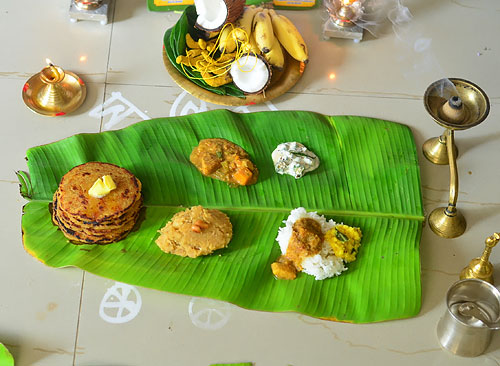
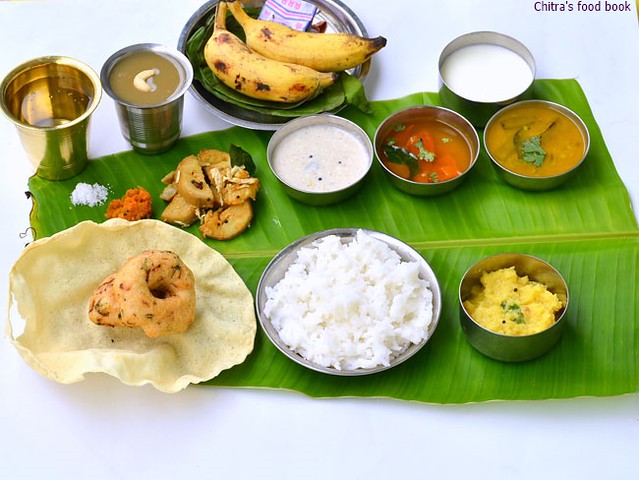
We make kali, 7 kai kootu, adai, cooked rice, thayir pachadi, dal/paruppu and sambar for neivedyam. So we do some pre-preparatory works for cooking as well. We roast rice + dal, powder & keep it for kali. We chop the vegetables for kootu & sambar and refrigerate it in a box.
Thiruvathirai day 
On Festival day, we should do the pooja in the early morning in auspicious time. This year as it falls on Wednesday, we should do the pooja before 7.30am ( Avoid rahu kalam, yama kandam). So start the cooking activities by 6 am. Prepare thirivathirai kali, adai & kootu ( Rice, dal, sambar, thayir pachadi). Decorate the pooja room with flowers and light the lamp. Arrange all the neivedyam dishes in the banana leaf. Keep a plate with banana, coconut, betel leaf and nut, turmeric pieces along with yellow rope. Do the pooja by showing dhoop, dheep and mangala harathi. After doing the pooja, tie the yellow rope around your wrist or neck.
Enjoy kali, kootu and adai !!
DISCLAIMER : The pooja procedures I have shared above is as per my family’s practice. Many people don’t have the habit of drawing thear, maakolam, offering adai. Even my mom makes kali and kootu for thiruvathirai and offers them in front of Lord Nataraja picture for pooja. So take this post as a guidance and change it according to your custom.


الثلاثاء، 30 أغسطس 2016

Ganesh Chaturthi – Pooja Procedure/Puja Vidhi/ Vidhanam

Ganesh chaturthi pooja vidhanam
Last year I made a post on with details about Abishekam things, pooja items along with its procedures and Ganesh chaturthi recipes links. But it is purely based on my family’s tradition and practice. Some people have the practice of keeping Kalasha & Gouri on this day. Recently one of my readers requested me to share Ganesh Chaturthi Pooja Vidhanam/Puja vidhi along with mantras just like my Varalakshmi Vratham pooja post. So I referred my book “Avanai maadha Pooja Vidhanam” ( My friend Shalini’s gift) and shared the slokhas, detailed pooja method with pictures and Ganesha story in PDF format ( you can see at the end of post) to help people who wish to celebrate Ganesh chaturthi pooja in an authentic way. I have shared pooja vidhanam in Tamil. So I have mentioned some useful links for pooja vidhi in Sanskrit, Hindi, Telugu and Kannada at the end of the post. Hope you find them useful.
Ganesh Chaturthi festival is celebrated as the birthday of Lord Ganesha.He is the first worshipped God before any holy puja or occasion.This year 2016, Vinayagar Chaturthi festival falls on September-5th, Monday. This festival is also known as 'Vinayak Chaturthi' or 'Vinayaka Chavithi' .It is observed during the Hindu month of Bhadra in Hindi /Avani in Tamil (mid-August to mid-September). For more information on Ganesh chaturthi festival, click this link
.
Click this Video on how to make Homemade Ganesh using Kozhukattai dough.

For Ganesh chaturthi Kolam/Rangoli designs, please Visit my in-laws blog for Learn kolam.

Disclaimer : The pictures and pooja procedures I shared in this post are from a devotional book gifted by my friend. This is just one of the ways of celebration. It may vary from place to place. Please consult the elders in your family and follow your tradition.Beginners can follow this if you don’t have any specific procedure at home. Thanks for visiting this page.
How to celebrate Ganesh chaturthi at home


Ingredients 

List for Abishekam, pooja & neivedyam
  • Ganesh idol

  • Wooden plank or peeta to place Ganesha

  • Flowers

  • Milk

  • Curd

  • Honey

  • Tender coconut water

  • Water

  • Rice flour

  • Sesame oil

  • Turmeric powder

  • Shikakai powder

  • Kumkum,Sandal paste

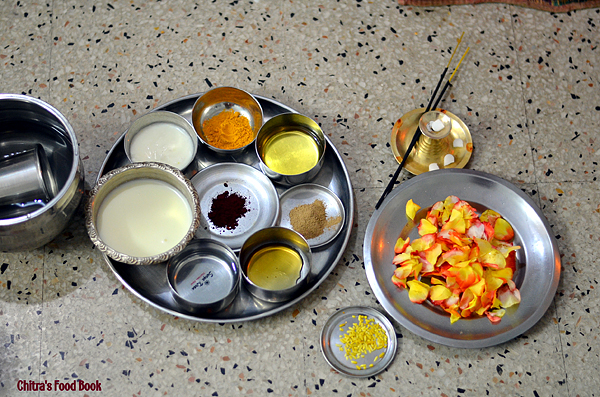
  • Panchamirtham (Curd based delicacy consisting of Panch(5) items: Milk, Sugar, Ghee (clarified butter), Honey, Bananas)  Some items are not shown in pic.

    Ganesh chaturthi pooja


    For Decoration & pooja

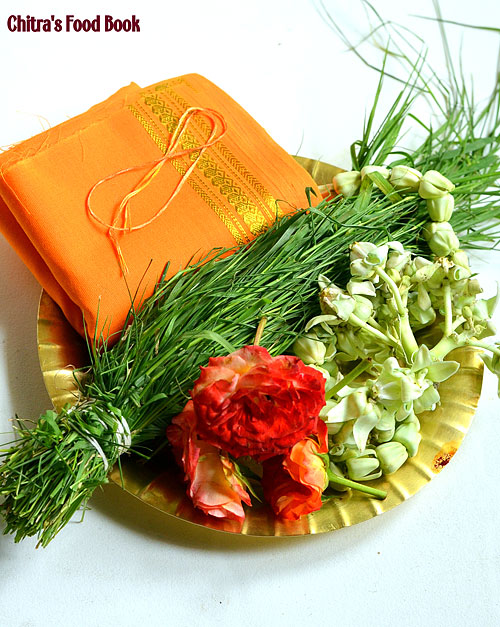
    • Vastram for Ganesha ( New blouse bit or dhoti cloth)

    • Mupiri nool for poonool ( 3 threaded string)

    • ArugamPul (Bermuda grass (English). Arugampul (Tamil), Dhub (Hindi), Durva (Sanskrit). Karuka (Malayalam), Garikagoddi (Telugu), Garikoihallu (Kannada))

    • Tulsi leaves ( Its allowed only on this day)

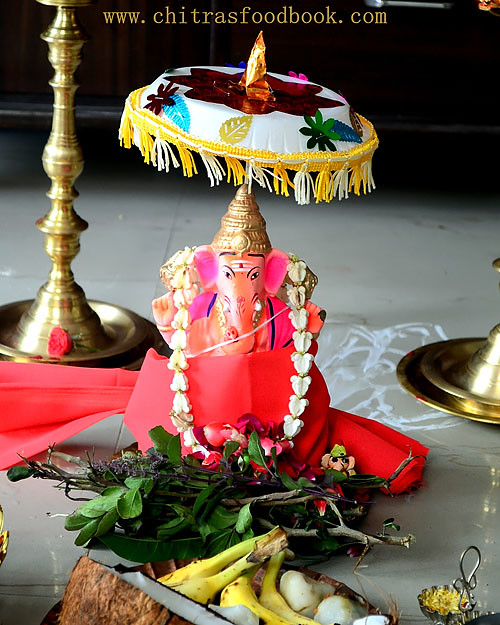
    • Vellerukku Malai ( White flower garland, refer the above picture)

    • Yellow rice/Akshathai

    • Flowers

    • Kumkum & Sandal powder

    • Incense stick

    • Camphor

    • Sesame oil & ghee for lamp

    • Fruits,coconut,betel leaves & betel nut for offering

    • Banana leaf

    • Turmeric powder for manjal pillayar

        For Neivedyam recipes
        Click THIS LINK for Neivedyam recipes collection.

    • Coconut

    • Jaggery

    • Chana dal/Moong dal

    • Sugar

    • Besan

    • Urad dal

    • Green chillies,ginger,salt ( for pooran)

    • Raw rice for payasam

    • Urad dal for vada

    • Wheat flour,banana & jaggery for appam

    • Sesame seeds for ellu urundai

    • Click HERE to see the no onion no garlic lunch menu cooking with ingredients

    how to celebrate ganesh chaturthi
    Abhishekam Orderhow to celebrate ganesh chaturthi

    Benefits of Abhishekam
    PANCHAGAVYAM - Removes all sins of mankind
    PANCHAMRUTHAM - Gives wealth
    GHEE- Gives Moksha state
    MILK - Gives long life
    CURD - Gives Good Children
    HONEY - Melodious voice
    RICE POWDER - Frees from debts
    SUGAR CANE JUICE - Gives good health and removes enmity
    LIME JUICE - Removes fear of death
    TENDER COCONUT JUICE - Gives enjoyment and full satisfaction in life
    SANDAL PASTE - Gives Lakshmi's Grace
    SUGAR - Removes enmity
    Source : http://www.teluguone.com/devotional/content/what-are-things-used-in-shiva-abhishekam-its-effects-56-27598.html#sthash.kCQAROkq.dpuf
    how to celebrate ganesh chaturthi

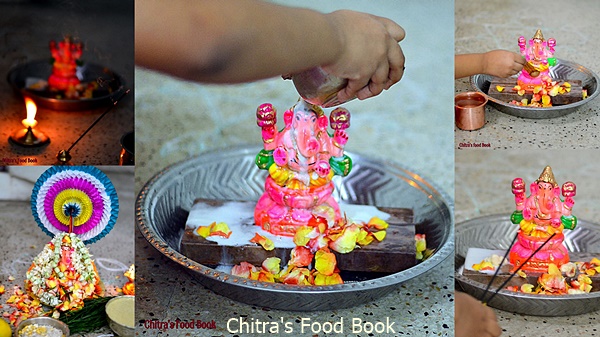
    Abhishekam should be done by the elders of the family. In our house, my daughter sits with my husband and do the abhishekam :)  Refer the above picture. If you are having Ganesha made of Turmeric powder, soft clay or Kozhukattai dough, pour water and other abhishekam items only in spoons else Ganesha will dissolve in water.

    You can chant this Ganesha Gayathri mantram while doing Abhishekam.
    Om Tatpurushaya Vidmahe Vakratundaya dheemahi, Tanno Danti Prachodayat”

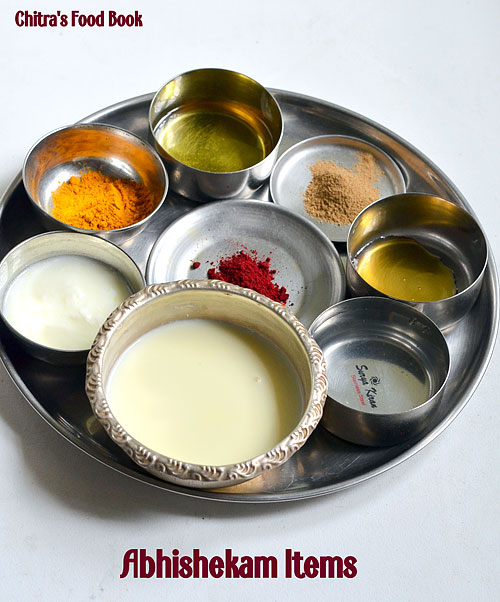
    Draw Kolam/Rangoli on where you are going to do the pooja.Take all the abhishekham items in a plate as shown in the picture. Keep a bowl full of water.Keep some flowers in a plate. Keep an incense stick and a camphor ready.Take a wide plate ( thambaalam). Place a wooden plank inside it and keep the Ganesh idol. Start the abhishekam by putting some flowers and few drops of water. Before doing abhishekam,keep this mind. Ganesh idol should not fall down during abhishekam. So do not pour more water. Touch the idol carefully with support. First do the sesame oil abhishekam, then apply shikakai powder.Wash it well by adding water.Then apply turmeric powder, light the incense stick and show the dhoop & dheep. Mix rice flour in water and do the abhishekam.Then comes milk, lemon juice, tender coconut water, curd, panchamirtham followed by honey. Collect the panchamirtham with honey in a plate.Pour some water and then continue with sandal paste, Kumkum and lastly viboodhi abhishekam. Finish the abhishekam with little milk.Show the dheep. Pour water and start to decorate the Ganesh. Collect all the abhishekam water in the wide plate and pour in tulsi plant or under some trees.


    Lord Ganesha Decoration
    Wipe the idol with a clean cloth. Put a poonool / Mupiri nool(3 threaded string) from left to right keeping Ganesha facing towards you. Then wear a new cloth for the idol. Decorate with Tulsi leaves (Generally Tulsi should not be used to decorate Ganesha. But it is allowed only on this day.) Vellerukku malai, arugampul malai and flowers. After abhishekam & decoration,start doing the pooja.

    How to do pooja
    Check out this PDF for detailed pooja stotras in Tamil. Please download it and follow the directions.
    Before you start the pooja, keep lots of flowers, leaves and Arugampul in a plate. Make a small cone shaped pillayar/Ganesh with turmeric powder and keep a kumkum dot. Keep a small bowl full of Panchamirtham and a spoonful of honey in a bowl.
    If you are placing Kalash, It should be placed firmly on a Copper/Silver plate with rice spread on it. A Coconut is placed over the mouth of the Kalash. Five mango leaves are placed inside the kalash before placing the coconut (like a skirting).
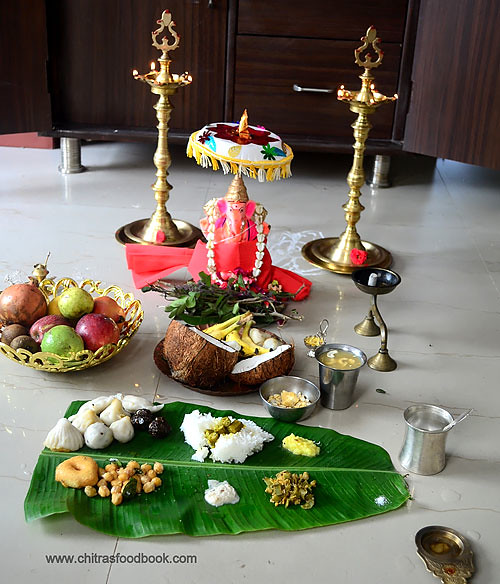
    The decorated Ganesha Idol can be placed above on a table/stool and the Kalasha and its plate can be placed in the ground. Light the lamp on the sides of Ganesha. Keep the small turmeric Ganesha( made of turmeric powder mixed with little water) nearby the idol. Keep kumkum & flowers. Place a plate with 5 types of fruits, broken coconut, betel leaves & nuts in front of the God.
    In another plate or banana leaf,spread the neivdeyam recipes. Kozhukattai varieties comes to the left side of Ganesha. Rice and other items has to be kept in the usual order. Refer picture for the idea. Keep payasam and aval.pori kadalai/Puffed rice with peanuts in small bowls. Start doing the pooja.
    For any pooja, Poorvanga pooja is considered as Pradhana pooja. So keep the turmeric Ganesha before the Ganesh idol and start the poorvanga pooja mantra. Check out this PDF for detailed pooja stotras with method in Tamil. Please download it and follow the directions. For complete Puja vidhi in Hindi, Tamil, English, Kannada, Telugu and Malayalam, Please refer THIS LINKFinish the pooja with mangala aarti !

    Ganesha Chaturthi pooja vidhi with mantras in sanskrit / english
     http://www.drikpanchang.com/festivals/ganesh-chaturthi/ganesha-chaturthi-puja-vidhi.html
    Please use http://www.virtualvinodh.com/aksharamkh/aksharamukha2.php to transliterate the mantras to your script (tamil / telugu / kannada ) from Devanagari.


    Siddhi Vinayaka Ashtottara sata namavali  in other languages


    Sanskrit -  http://sanskritdocuments.org/doc_ganesha/vinaayaka108-5.html?lang=sa
    Tamil -  http://sanskritdocuments.org/doc_ganesha/vinaayaka108-5.html?lang=ta
    Telugu -  http://sanskritdocuments.org/doc_ganesha/vinaayaka108-5.html?lang=te
    English - IAST - http://sanskritdocuments.org/doc_ganesha/ganesha108.html?lang=iast

    AUDIO,VIDEO LINKS FOR OTHER LANGUAGES
    • Click this LINK for Pooja Vidhanam Audio in Telugu
    • Check this LINK , LINKfor Pooja Vidhanam Audio in Tamil
    • For Hindi version,check this youtube video LINK
     After celebration procedures ( Visarjanam)

    On Chaturthi evening, make wheat flour appam and do the neivedyam.The next day morning, you can keep idli for neivedyam or simply fruits would do. On afternoon,keep dal & rice with ghee for neivedyam. Continue this neivedyam till Ganesha stays in your house.The next day or the third day, take the ganesha idol along with flowers & vastram,some puffed rice,jaggery and fried gram dal(Do not remove anything from idol) and put it in water.Let the Ganesh idol dissolve  in water and take away all the misfortunes of people.
      Click THIS LINK for Neivedyam recipes collection.
    ganesh chaturthi pooja vidhanam

    Neivedyam Recipes


    Please click this LINK for full collection of neivedyam recipes.This is the LINK for Kozhukattai making Videos & Homemade Ganesh idol using rice flour dough.

    Disclaimer : The pictures and pooja procedures I shared in this post are from a devotional book gifted by my friend. This is just one of the ways of celebration. It may vary from place to place. Please consult the elders in your family and follow your tradition.Beginners can follow this if you don’t have any specific procedure at home. Thanks for visiting this page.
    Wish you all a very happy Ganesh chaturthi ! Happy
    Thanks for visiting this page !


    الاثنين، 1 أغسطس 2016

    Aadi 18(Pathinettam Perukku) - How To Celebrate Aadi 18

    Aadi 18/Aadi perukku
    Last year I shared the celebration procedures for most of the important Hindu festivals to help beginners and to keep a record for my future reference.But I couldn’t make a post about our first festival, Aadi perukku celebration procedures in a detailed manner.So this year I wanted to share it with my last year’s celebration pictures. As you all know, Aadi perukku also known as Pathinettam perukku is a unique South Indian festival that marks the beginning of Tamil festivals. It is observed on the 18th day of Tamil month Aadi.This year 2016, it falls on August 2nd i.e tomorrow. I have shared the significance of Aadi 18, What to do on Aadi 18, its rituals and how to celebrate this festival, Aadi 18 prasadam/Neivedyam recipes links in detail. Please go through them and have a happy aadi 18 celebration. Hope beginners would find this post useful.
    Wish you all a very happy Aadi 18Happy.


    Aadi 18/Aadi perukku pooja


    SIGNIFICANCE OF AADI 18

    Aadi 18/ Perukku, as the name indicates, is a festival observed on the 18th day in Tamil month Aadi. It is also known as Pathinettam perukku and ‘perukku’ means ‘rising.’.The rising here indicates the overflowing of rivers like Kaveri due to the monsoon rains. It is celebrated near river basins, water tanks, lakes and wells of Tamil Nadu.This festival is essentially celebrated by farmers and other people who depend on the rivers and monsoon rains for their livelihood.Special prayers and pujas are done in temples and people pray Mother Kavery and Rain God Varuna Bhagavan for a good harvest, constant supply of water and hassle free monsoon.
    On this day, all family members make a trip to the riverbank and prepare a special lamp using rice flour and jaggery (maavilakku), which is placed on mango leaves and lit. Flowers, turmeric and a yellow thread are also placed on the mango leaves. Women float the lamps along with the mango leaves and other accompaniments in the river. People prepare several varieties of rice( Chitranna)on this day and family members are joined by relatives and friends. Family members go on a picnic to riverbanks along with the food prepared. The riverbank or seashore picnic is a major event in some districts in Tamil Nadu on this day.
    In some regions in Tamil Nadu, newly married couple is invited to home and son-in-law is given gifts on the day. Usually during Aadi month, the newly wed brides spend the month at her parent’s home and on Aadi Perukku, a gold coin is added to the thali or mangalsutra in some southern districts of the state.
    Source : http://www.hindu-blog.com/2008/07/aadi-18-perukku-in-2008.html

    how to celebrate aadi 18

    POOJA REQUIREMENTS
    • Flowers
    • Turmeric, Kumkum
    • Thread greased with turmeric powder( Yellow rope/Manjal kayiru)
    • Raw Rice & Jaggery
    • Coconut,betel leaves & nuts
    • Banana & Locally available Fruits
    • Blouse bit, new dress(Saree or any girls dress)
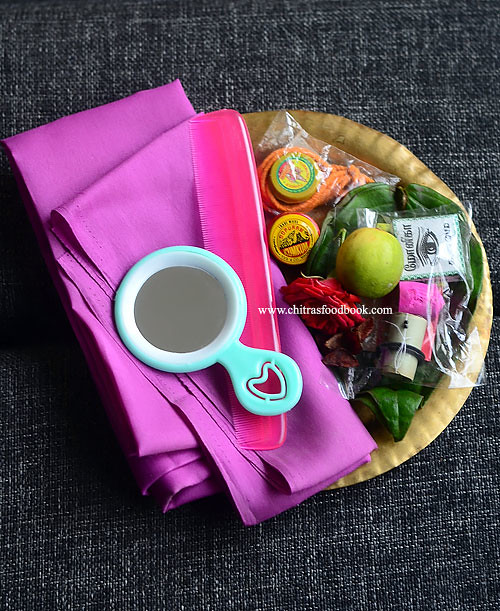
    • 1 Mirror
    • Bangles, gold jewels, Kaatholai Karugamani ( Small black bangle, refer the above pic)
    • 1 Lemon
    • Banana leaf for keeping neivedyam
    • Other pooja items like oil,ghee,camphor,incense stick and sambrani/Dhoop.
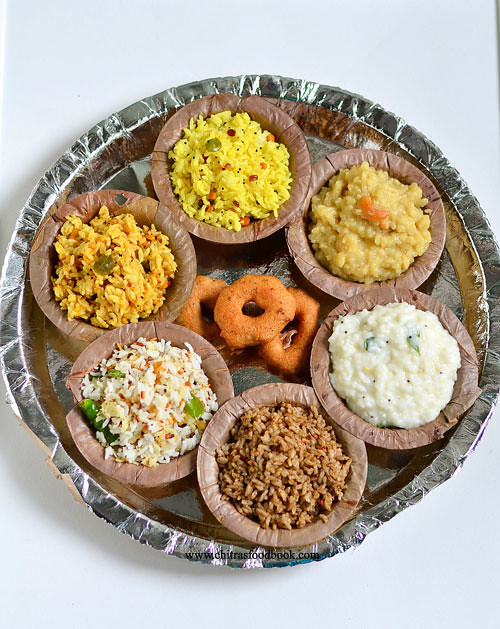
    • Ingredients for making Rice varieties like Ellu sadam, Tamarind rice, Sweet Pongal, Curd rice, coconut rice & Sundal.
    Check out my in-laws blog Learn Kolam for kolam ideas.
    OUR CELEBRATION
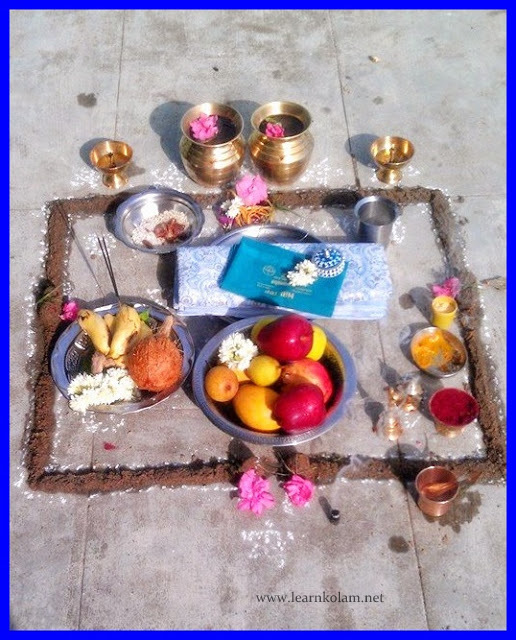
    Usually Aadi 18 is celebrated in River banks or near water bodies.So my MIL celebrates this festival near water tank in Salem house by drawing a square shaped box with sand( We call it as “Manal veedu”). Make small Pillayar with sand, keep all the Pooja items in front of Pillayar and do the neivedyam. Refer the picture shared below from my in-laws blog "Learn Kolam". Then she drops the flowers, lemon, turmeric into the water tank.But I celebrate in my apartment in a simple manner as suggested by my MIL.

    Aadi perukku pooja

    HOW TO CELEBRATE
    The previous day to the festival, wash all the lamps. Keep turmeric, Kumkum dots, put oil, threads and keep the lamps ready.Clean the house. Wipe the doors, windows clean and keep turmeric, kumkum dots. Prepare Pulikachal/Puliogare paste, Ellu podi, coconut rice mix. Draw Rangoli/Kolam at night. Draw with rice flour paste/ Arisi Maakolam or rangoli powder/Kolam maavu. Check out my in-laws blog Learn Kolam for kolam ideas.
    The next day early morning around 5 am, take bath and get things ready for doing pooja. We should do the neivedyam before 6am or at least before 7am.Decorate the pooja room with flowers. For morning pooja, make 2 manjal pillayar( One as Lord Ganesh and other one as Amman) and place it in a wooden plank, light two lamps on the sides. Keep this setup in front or inside your pooja room.To make manjal pillayar, take 1 tbsp of turmeric powder, add little water and make 2 small cones. Keep a kumkum dot. In front of the manjal pillayar, place coconut, betel leaves, betel nuts, all fruits, flowers, Yellow rope in a plate. In another plate, keep turmeric, kumkum, sandal powder or tablet, one mirror, bangles, one lemon, your gold jewelries, one new blouse bit, a new dress ( saree or any girls dress) if you have in hand, Katholai karugamani( small black bangles, available in pooja stores). In a bowl/Sombu, fill water till its brim ( Its considered as Kaveri water) & keep it. In a small bowl, mix raw rice and jaggery. This is for neivedyam. Light lamps and do the pooja by showing Dhoop, dheep and mangala harathi. After doing the pooja, tie the yellow rope around your neck by yourself. Tie the rope in hands for small girls at home. Take the manjal pillayar, mix with some water, put the katholai karugamani, lemon, flowers and pour everything in a plant pot or tree. After sometime, take the lemon after sometime & use it in your cooking.
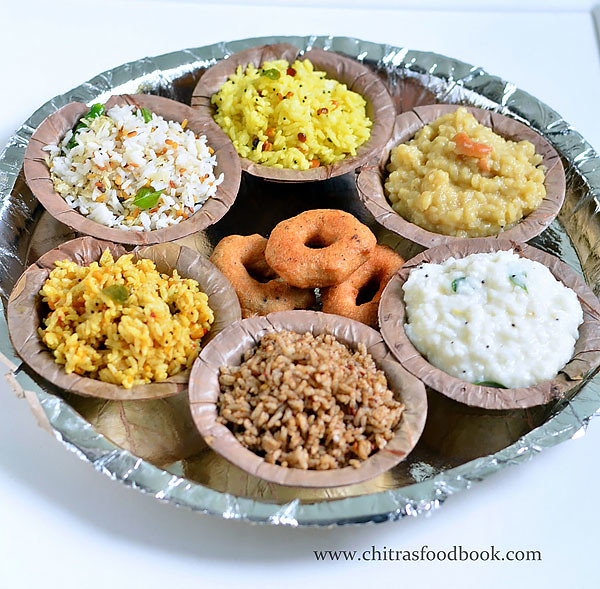
    In the afternoon, in an auspicious time, do the pooja with 5 rice varieties and pepper vada/Milagu vadai. I make chana sundal too.
    Every year I prepare Lemon rice, tamarind rice, Coconut rice, sweet pongal & curd rice. Sometimes we make payasam with jaggery instead of sweet pongal and make Ellu sadam or milagu jeeraga sadham to make a count of 5. My mom used to say we have to make 18 rice dishes for aadi 18 ;)  I don’t know how far it is true & is it possible to make 18 rice varieties? Winking.
    I have shared the links of all variety rice recipes , sweet pongal & payasam recipes &  vadai ( two versions) below. Please check it.
    NEIVEDYAM RECIPES
    aadi 18 recipes
    OR
    Try these recipes and have a great Aadi 18 celebration !!
    aadi 18 celebration

    الأربعاء، 13 أبريل 2016

    Tamil New Year Celebration, Recipes – Varusha Pirappu Recipes Collection

    Tamil New Year – Varusha Pirappu/Tamil Puthandu is the celebration of first day of the Tamil  new year that comes in Mid April. Its a special day for Tamilians as it marks the beginning of all Tamil festivals. Following this, we celebrate Rama Navami, Chitra Pournami,Aadi Pandigai etc..This year, Tamil new year falls on April 14, 2016. Tamil people all over the world celebrate this day by Keeping new Panchangam  and offering some special dishes like Mango Pachadi, Panakam, Neer mor etc. This festival falls in the month of Chithirai, the first month of the Tamil solar calendar. On the eve of Chithirai Puthandu, a tray arranged with three fruits (mango,banana and jack fruit), betel leaves and arecanut, gold/silver jewellery, coins/money, flowers and a mirror is placed. This is to be viewed upon waking in the morning.
    In the temple city of Madurai, the Chithirai Thiruvizha is celebrated in the Meenakshi Temple. In Kerala, people celebrate this  day as Vishu festival. The day is marked with a feast in Tamil homes and entrances to the houses are decorated elaborately with  Maa kolams (Visit my in-laws blog to check varieties of Kolams). In most parts of India, one can see neem trees blooming with their flowers and the first batch of mangoes hanging prominently. So this day is celebrated with neem flowers and raw mangoes to symbolize growth and prosperity ( Source:Wiki).
    As I am posting the celebration procedures of all our Indian festivals, I guess my regular readers would be expecting this post from me Happy. Though the celebration method is very simple, the specialty of this festival lies in including Raw mango, fresh or dried neem flowers & making an elaborate full meals lunch menu for offering God along with fresh fruits.We should include all the five taste on this day. Full meals menu includes Rice, Mango Pachadi, Paruppu, Sambar, Poriyal, Kootu, Payasam, Vada. You should make Panakam and neer mor if you keep Panchangam for pooja else its optional. You can do it for Rama navami. Lets see the celebration procedure of Tamil new year with recipe links.
    Tamil New year kolam

    Kolam from my in-laws blog
    Ingredients for Pooja & menu

    On this day we avoid vegetables like Drumstick, Bottle gourd, brinjal, Keerai/greens, cabbage, Beetroot, Carrot, Beans, Potato, Onion and garlic in our cooking as we offer the lunch menu to God.
    • Lamp
    • Flowers
    • KumKum and turmeric powder
    • Betel leaves & nuts
    • Banana leaf
    • Coconut
    • Match box,incense stick, dhoop, and camphor
    • Banana, Mango & fruits like apple, jackfruit on ur wish ( Banana is essential)
    • Vegetables like Raw banana, cluster beans, Broad beans, Lady’s finger, Gooseberry etc
    • Raw Mango ( Must buy)
    • Dried or fresh neem flowers
    • Urad dal for making vada
    • Rice & dal, jaggery for making Payasam
    • Other essentials for cooking
    Preparations for Tamil New Year
    On the previous day, i.e 13th of April, Wash the lamps, clean the house. Keep dots, put threads in the lamps. Buy all the required fruits, vegetables, groceries, flowers and pooja items for the festival and keep them ready.Soak the urad dal for vada and grind the batter using mixie or grinder. Keep the batter in fridge without adding salt.
    If you want, you can roast the rice & dal and keep it ready for making payasam the next day.Chop all the vegetables and store in a box if needed.These pre preparations can be done to make the lunch quickly.
    You can do the pooja at any auspicious time. Make sure there is no Rahu Kalam and Yama kandam. Tomorrow – Thursday, we can do the pooja anytime after 7.30am before 1.30pm.
    How to prepare the menu
    On April 14th, early morning we take head bath and draw maa kolam in the entrance and before pooja room. Keep flowers and decorate the pooja room. Start preparing the lunch menu. Pressure cook roasted rice+dal mixture for making payasam. In another cooker, keep the rice. After cooking rice+dal for payasam, add the jaggery and let it boil. Add coconut milk and cardamom powder.Add the fragrant spices like Pachai karpooram, Jathikai powder. Roast cashews in ghee and add to payasam. Transfer the payasam to a bowl and wash the cooker. In the same cooker, pressure cook moong dal for making paruppu. Temper mustard seeds, curry leaves and hing. Add to the cooked moong dal.Make Mango pachadi.Keep it ready. Make sambar, Poriyal or kootu. We make either poriyal or kootu for the menu. You should make Panakam and neer mor if you keep Panchangam for pooja else its optional. Instead of this full meals menu, you can make 5 rice varieties like Lemon rice, Coconut rice, Sweet pongal, Tamarind rice and curd rice along with vada and payasam.
    Lastly you can make Urad dal vada and appalam. Make Mormilagai and pickle if you wish.
    If you can’t get Raw mango and Neem flowers, no issues. Just make some thayir pachadi with vegetables like carrot or lady’s finger or even with vada and offer to God.
    How to do the pooja
    After you finish cooking, wash the banana leaf and spread it in front of pooja place. Arrange all the prepared dishes in the banana leaf ( Check out my Full meals lunch menu post to view the order of arranging the dishes ).Light the lamps. Show the incense stick, do the neivedyam.Show the dhoop, deep and finish the pooja showing mangala Harathi.


    Recipe Links for making Full meals

    FULL MEALS MENU

      OR


      Variety Rice Recipes + Vada + Payasam

      Check out my Full meals lunch menu post to view the order of arranging the dishes 
        KOOTU VARIETIES

        Mixed vegetable kootu OR Avial

        PORIYAL VARIETIES
        PACHADI VARIETIES
            OTHER LUNCH MENU IDEAS
        OTHER SWEETS

        Sweet pongal / sakkarai pongal in cooker

        Obbattu/Puran poli

        15 Easy Sweets collection

        KESARI RECIPES


      • Semiya/Vermicelli kesari

      • Microwave rava kesari

      • Milk kesari/Paal kesari recipe

          All the above recipe links are for variations. You can try any based on the availability of ingredients. Its not a hard and fast rule to make a full meals and offer GOD. Some people celebrate Tamil new year just by offering a payasam & vada. If you are a bachelor and wish to do the pooja, you can simply soak Poha/Aval in Milk adding sugar & cardamom and offer to God. GOD will accept everything and anything if done whole heartedly. The celebration procedure I have shared here is based on my family practice.It may vary as per your tradition and custom.So beginners, please consult the elders of your family and do the pooja Happy.
          Wish you all a very happy & prosperous Tamil New Year !!
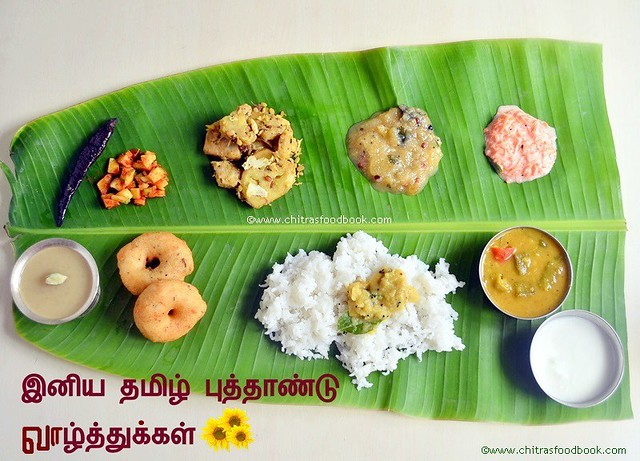
          அனைவருக்கும் இனிய தமிழ் புத்தாண்டு நல் வாழ்த்துக்கள் !!!


          Technorati Tags: Tamil new year recipes,Tamil new year celebration,Tamil new year celebration method,Tamil new year celebration procedure,Tamil new year pooja,tamil new year procedure,Tamil new year 2016,Pooja procedure,How to celebrate tamil new year,Tamil new year lunch menu,Varsusha pirappu recipes,Varuda pirappu menu,Puthandu recipes,festivals
          Very good recipes Tags: Tamil new year recipes, Tamil new year celebration, Tamil new year celebration method, Tamil new year celebration procedure, Tamil new year pooja, tamil new year procedure, Tamil new year 2016, Pooja procedure, How to celebrate tamil new year, Tamil new year lunch menu, Varsusha pirappu recipes, Varuda pirappu menu, Puthandu recipes, festivals

        • الأحد، 6 مارس 2016

          How To Celebrate Maha Shivaratri – Celebration Procedures

          Maha shivaratri celebration

          Image source : Up-Rising in flickr 
          Maha Shivratri is a Hindu festival celebrated every year in reverence of Lord Shiva. It is also known as Padmarajarathri. It is celebrated all over South India(In Tamil nadu, Karnataka) and North India. Shivaratri literally means the great night of Shiva or the night of Shiva. It is celebrated every year on the 13th night/14th day of the Maagha or Phalguna month of the Hindu calendar. This year 2016, it falls on March 7th. Vrat time is from Sunrise on March 7 to sunrise on March 8. On shivaratri day, fasting involves refraining from eating any food and not sleeping through out the night.  Followers visit Shiv temples and bath the idol of Lord Shiva and follow rituals to please the lord. Devotees begin the day by worshipping the Lingam of Lord Shiva in temples.
          According to Shiv Purana, the following items are a must: Shiva Linga must be bathed with water, milk and honey. Also, bilva patra must be offered to the lord as it purifies the soul. Vermilion ( a reddish orange paste) must be applied over Shiva Linga after bathing, it represents virtue. Symbolizing longevity, different kinds of fruits are offered to the Linga for the fulfillment of wishes.The worship is then concluded with Lord Shiva’s Aarti. The day is considered auspicious for women. They fast and pray to the Lord to get blessed with blissful married life, while unmarried woman would pray for an ideal husband like Shiva.People chant “Om Nama Shivaya” all through the day.
          There are different stories based on different puranas on why we celebrate Maha Shivratri. Some of these stories are mentioned here.
          • According to a few books, Maha Shivratri is the night when Lord Shiva performed the Tandava.
          • Based on a few other puranas, it is believed that Lord Shiva drank “halahal” or poison on this day, and was known as Neela kantha then after.
          • Some believe that Lord Shiva married Goddess Parvati on this auspicious day.

          Tradition of Drinking Thandai

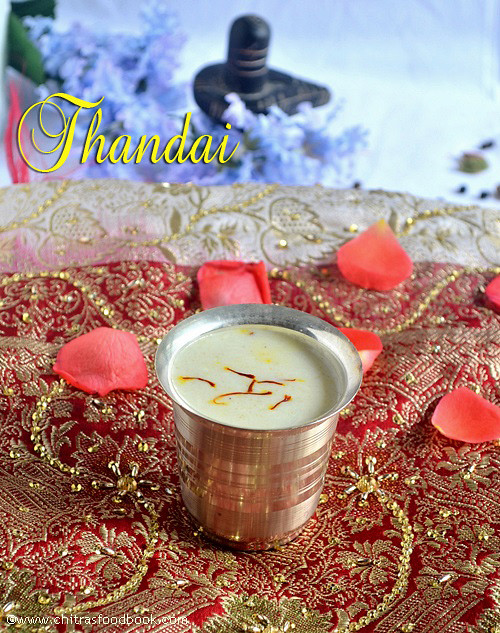
          Since Lord Shiva is regarded as an ascetic god, Maha Shivratri is very popular with ascetics. Thandai, a drink made with bhang (cannabis), almonds, and milk, is essentially drunk by the devout on the day as cannabis is said to have been very dear to Shiva.

          Food and Fasting

          People fast for the whole day on Maha Shivratri. They start the day by worshiping the lingam of Lord Shiva. People eat satvik food such as sabudana khichdi and thandai (bhang). Devotees also wear Rudraksh beads on this day. According to mythological stories, rudraksh beads are believed to have been originated from Lord Shiva’s tears.
          It is believed that simply by worshipping the lingam after a bath helps devotees achieve the blessings of Lord Shiva and moksha. All sins are forgiven and spirituality is awakened. So, with a clear heart and soul, worship Lord Shiva on this Maha Shivratri and be blessed all your life.
          Source : http://womenpla.net/celebrating-mahashivratri/ 
           http://www.mahashivratri.org/shivaratri-celebrations.html

          Maha shivaratri kolam

          Ingredients required For Pooja

          Visit my In-laws blog “Learn Kolam” to view Kolams for Maha shivaratri.
          • Flowers for decorating Lord Shiva
          • Lamp
          • If you wish to perform abishekam, keep some milk, honey, ghee, curd and water.
          • Bilva ( Bael) patra leaves/ Vilvam in Tamil
          • Coconut, Betel leaves, Nuts & fruits
          • Incense stick
          • Camphor

          How do we celebrate Maha Shivratri

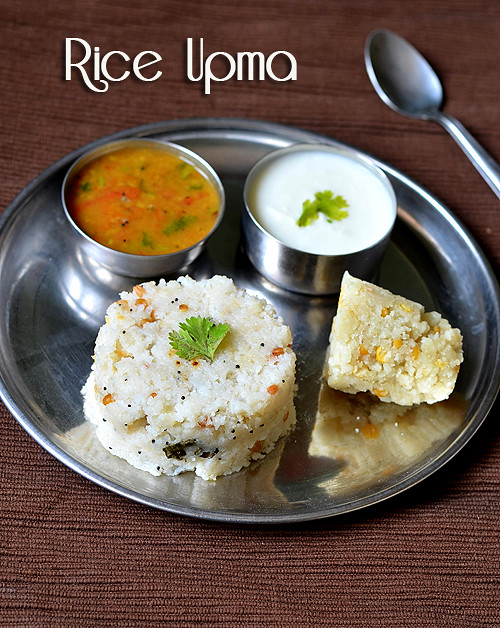
          In my family, On Shivratri day, we take bath in early morning, draw Rangoli in the entrance & in front of Pooja room ( I usually draw Chariot kolam). We decorate the Lord with flowers especially Bilva Patra/Vilvam and perform pooja by chanting “ Om Nama Shivaya” for 1008 times.We fast from morning to evening. In the evening around 4pm , we take bath again and make neivedyam for Lord shiva. Around 6 pm, we offer Sweet puttu/ Rice Jaggery puttu / Arisi vella puttu in Tamil, Boiled Sweet potato and field beans ( based on their availability in market) for Lord Shiva, do the pooja and finish with Mangala Aarti. Along with this, we make a no onion no garlic rice upma, Sambar and buttermilk. We have the same for dinner around 7 pm. We don’t have the practice of being awake the whole night. If you wish to perform Abishekam, you should not sleep through out the night. Abishekam should be performed every three hours. ie First three hours with milk, Second three hours with Curd , third with ghee and fourth with honey( Overall 12 hours). After abishekam decorate with Bilva leaves. Lord Shive will be more happy when decorated with Bilva leaves more than jewels. The next day morning, we cook & eat a No onion No garlic meal and finish our fasting. We are not supposed to have Tiffin items as the Vrat won’t be fulfilled without having this menu.
          In North India, People offer varieties of recipes like Thandai , Sabudana Kichdi , Sabudana vada, Lauki halwa, Kuttu ki poori, Sabudana Kheer, Motichoor ladoo and Kachori.

          It is believed that simply by worshipping the lingam after a bath helps devotees achieve the blessings of Lord Shiva and moksha. All sins are forgiven and spirituality is awakened. So, with a clear heart and soul, worship Lord Shiva on this Maha Shivratri and be blessed all your life.


          Neivedyam Recipes

          Arisi Vella Puttu / Sweet puttu
          Thandai
          Sabudana vada
          Sabudana Kheer / 18 Payasam varieties collection
          Rice upma
          Sambar ( Skip onions in this recipe )
          Neer mor/ Spiced buttermilk
          No Onion No Garlic Lunch Menu


          Disclaimer : I have shared the procedures based on our tradition.Please take the as a reference,consult the elders of your family and do the pooja as per your practice.Beginners can follow this if you don’t have any specific procedure at home.